Sunday, 31 July 2016

Irregular, like this blog

One of the great pleasures of the British Championship has always been that some people seem ready to play any old nonsense in the openings. I don't know whether that's because
  • they're not taking the tournament sufficiently, or
  • they're taking it too seriously, or (most likely)
  • neither, and the only person taking this too seriously is the present writer
but anyway: South Coast silliness kicked off in Round One with Wells v Birkett [1-0, 34] which was drawn to our attention by the ECF Twitter account.

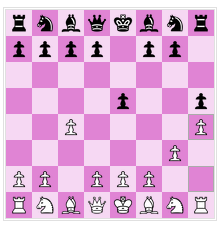
The Modern never looked like this when Ray played it. This version's not so much an Irregular Opening as an opening from a parallel universe where no such thing as regularity exists. By comparison Claridge-Hansen v Pleasants (all the pinkish diagrams are from here) was relatively sensible

1. c4 e5 2. g3 h5 3. h4

in so far as I could work out why the moves were played. It was, however, even more brief [1-0, 21] than the effort above.

Simons v Brown wasn't irregular in so far as the Blackmar-Diemer possesses a name

1. d4 Nf6 2. f3 d5 3. e4

but I can't say that I was surprised to see it knocked over in short order [0-1, 21].

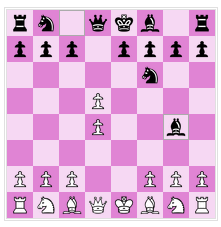
Modi v Mason's opening not only has a name, the Portuguese Gambit, I've actually gone so far as to play it -

1. e4 d5 2. exd5 Nf6 3. 3. d4 Bg4

and to be fair, [1/2, 17] was better than I did.

Friday, 29 July 2016

I can drive a tractor

Who's up for some tractor chess?


No really.


Saturday August 20, in the very small Spanish village of Hinojosa, in Molina-Alto Tajo district, the Siberia of Spain. In August it'll be a bit warmer than that suggests - and the kick-off's at high noon.

Friday, 22 July 2016

5. Mrs. Fagan's Politics

[This post by Martin Smith]

We start this fifth episode of the life and chess of Louisa Matilda Fagan by going back to May 1913 (and episode 3 once again) and that Hastings Congress dinner. The Mayor of Hastings rose to reply to a toast to his good self and was moved to observe, with mock irony, that:
"[he] had an idea that Mrs Fagan had strong opinions....the proceedings of some ladies were causing anxiety and if Mrs Fagan could use any influence he would feel greatly indebted to her. The worst of the ladies was - it was not confined to chess players - one never knew what their next move was going to be." (Hastings and St. Leonard's Observer 17 May).
Laughter ensued, said the report.
Had strong opinions.
Louisa Matilda Fagan published in 1898; 

but perhaps taken earlier? 
So just what were the "strong opinions", and so contrary, too, that were provoking such disquiet? What would the ladies play next? The British Chess Magazine of October 1897 may help us on the way to some answers...

Tuesday, 19 July 2016

No more heroes

And we're back in the tournament room.

We'll never see Viktor Korchnoi there again. Come to that, we'll never see his like again.


I was at that tournament. In fact I was at that analysis session too, sat just a few feet away while Jonathan Rowson and Viktor Korchnoi went through their game.


I don't remember that. But I remember being there.

Friday, 1 July 2016

4. Mrs. Fagan's Family

[This post by Martin Smith]

This is the fourth episode of a series on the life and chess of Louisa Matilda Fagan (née Ballard, 1850-1931) - earlier episodes are linked below. So far we have looked at her chess: she emerged on to the domestic scene in 1895, around the time of the formation of the Ladies Chess Club, and pretty much disappeared chess-wise (as did the LCC itself) when war broke out in 1914. She was considered, at some time in that career, to have been the strongest lady playing.

Now, in this episode, we will begin to reconstruct her non-chess biography (although there is - should anyone feel the need - one game of chess), though, be warned, it includes - as always - a fair degree of plausible supposition and guesswork. But before getting on with the job I will come clean and explain my fascination with Louisa Matilda (though surely I'm not the first to be in her thrall).
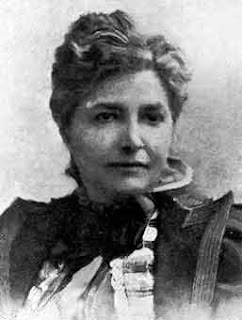
Mrs Fagan c 1897 
When looking at this photograph one has to make allowances for the conventions of late Victorian portrait photography which obliged the ladies to present themselves as demure and modest, and with none of the self-satisfaction permitted the male of the species (see painting below). Nonetheless, to me there is something striking about it (taken, as is likely, around 1897) and indeed the other published portraits of Mrs Fagan. In addition to her eye-catching - could we say Italianate - beauty there is an inward sadness that pervades the image. The declination of the lip, the faraway look, the veil of distraction; it is as if she is reflecting on some deep and troubling tragedy - yet without any hint of morbid melancholia. Although she avoids our eye, she faces us, and by extension life and its vicissitudes, with resolute composure and with serene forbearance and tolerance.

Could it be relevant that in none of the reportage, such as it is, of the social side of her chess career (the Congress dinners, the soirées at the Ladies Club), nor even in her BCM obituary (which we might have expected to refer to her personal circumstances and her nearest and dearest) is there scarcely a mention of her husband Joseph George Fagan; nor anyone else as her loyal escort, constant companion, and rock? Of her own published references to Joseph, the most telling comes in the BCM in October 1905, which we will deal with below; and now that we talking of her family life: nor is there any mention of children. This was all a stimulus to my curiosity about the enigmatic Mrs Fagan. So, in this episode we shall begin to try and get to the bottom of it, as we follow her through the long 81 years of her life, and begin to touch on the mores of Victorian society, and religion.            

Friday, 24 June 2016

Hackney Seen in St.Louis, Etc.

[This post by Martin Smith]

To borrow a phrase: this is not an orange...

  
I encountered said not orange some weeks ago at Tate Britain when looking for some chess-art here:


We have talked before on the blog about Conceptual Art, most notably in our discussions of Tom Hackney's work (of which more below), not to mention that of Marcel Duchamp (who pretty much invented the genre when he went "non-retinal"). So, I felt optimistic and ready for the fray...

Friday, 17 June 2016

3. Mrs. Fagan's Game Resumed

[This post by Martin Smith]

We are reconstructing the life and chess of Louisa Matilda Fagan (1850-1931). Not that we are the first to do so: Batgirl here, and Francesco Gibellato via here (but in Italian) have done their bit: although (I think it is safe to say) not in as much detail either chess-wise (to which this and the previous episode of this series are devoted), or biographically (which we will get on to next time).

Last episode we left Mrs Fagan at the end of 1897 (and now 47) as she crested the wave of her chess success, which she would surf for several years yet - though the detail becomes more sketchy. Her first tournament outing in 1898 was at Craigside in January - described by the BCM in the manner of a tourist brochure: "play took place in the Craigside Hydro, which is situated in a picturesque spot on the slopes of Little Orme's Head at Llandudno."
             
"A picturesque spot." We have passed this way before.  
Mrs Fagan's result in the Second Class Tournament was hardly a triumph: she finished 6th/9 with a score of 3.5, which included a loss to her Ladies CC colleague Miss Finn; and she fared no better in a separate handicap tournament where she received "Pawn and Two" against the top seeds - finishing on 50% and 6th/11 (BCM). By way of explanation for the disappointing performance the BCM added that "would probably have done better but for the indigestion during the final stages of the contest." Perhaps she had been under the weather all week.  

Mrs Fagan and Miss Finn returned to Craigside the following year, and were again unsuccessful in a field of ten (Belfast Newsletter 12 January) - though there are no reports of tummy trouble that year. Undaunted the duo was back yet again in 1901 with Mrs Fagan managing second place at her third attempt (6/8) and Miss Finn third (5/8) (Sheffield Daily Telegraph 7 January). But whatever their uneven results: overall "the annual tournament at Craigside affords a happy meeting place for a number of strong amateur players..." observed Gunsberg in a column in the Penny Illustrated Paper (26 January 1901), and accordingly the ladies might have found company, as well as tea and sympathy, in the salons of the Hydro.

Mrs Fagan competed elsewhere, of course, and below we will continue to follow her tournament fortunes before coming back, lower down, to her other chess activities.   

Tuesday, 14 June 2016

I'm Forever Blowing Blitz Games

You thought Magnus Carlsen was a Real Madrid fan? Maybe so, but this is a West Ham song.


Turns out Magnus had a ticket for the opening match of Euro 2016 (a game your correspondent missed due to being on a working holiday in Menorca, which may account for the recent absence of posts) and had taken the trouble to pick up a song in honour of the Irons' international midfielder, who repaid the world champion's faith in him by hitting a top-notch winner a few minutes before the end.


Presumably as Magnus was singing the English-language original rather than the French version he must have picked it up off the good people who follow West Ham rather than learning it in Paris.

Anyway the clip was first shown on Norwegian television, so the total number of YouTube hits is not by any means the total number of people who have seen it, but even so, it's odd that this entertaining clip of the most famous player in chess had, in two days on YouTube, been seen by only 495 people


by the time I wrote this entry (a little after the Ireland-Sweden game finished, since you ask).

Well, not really odd. Just odd if you think, like Nigel Short, that chess
is played by hundreds of millions of people around the world.
You'd have thought some of those hundreds of millions would be more interested.

Friday, 10 June 2016

Robert Coombes' Comeback

[This post by Martin Smith]

Back in 2011 - it seems so long ago - we told the story of Robert Coombes, aged 13, who, in 1895, murdered his mother. After an Old Bailey trial he was sent to Broadmoor - popularly known as a Lunatic Asylum - where he learnt to play chess, as it said in his hospital notes. In 1904 he appeared in The Irish Times listed as playing in a correspondence match for England against Ireland - and winning. His fellow inmate (or "patient", as you should prefer) Reginald Saunderson (also inside for murder) played for Ireland (and lost). We told Reginald's tale here.  


From the Weekly Irish Times, Saturday 7 May 1904

At the time it was enough that our Blog should follow Robert, and his acquisition of the chess bug, up to his release in 1912 (now age 30 and after he had been inside for 17 years). Beyond that his trail appeared to go cold in spite of your blogger's half-hearted effort to follow it further. I assumed that he had perished in World War 1.

Sunday, 5 June 2016

A few million Short

Interesting couple of articles in the Guardian on Friday about Kirsan, FIDE, the Panama Papers and the generally murky business relationships that this involves. It's worth a little bit of your time to look at them.

Well mostly it is, until it gets round to giving Nigel Short's opinion. Funny how often this happens.

What has English chess's Mr Motormouth to say this time?

The game is played by hundreds of millions of people around the world.
This blog looks forward, neither in hope nor in expectation, to hearing what evidence Nigel has for this claim, which looks just a little too much like a claim we've seen too many times before.

Friday, 3 June 2016

Champions of Europe

Curious letter in the Times Literary Supplement this week in which a selection of European sporting, intellectual and media celebrities - Raymond Blanc, Alfred Brendel, Costa-Gavras, Gérard Houllier and so on - urged the British electorate to vote not to leave the European Community on June 23.1

There's a couple of interesting names on the list, from our point of view.


As the claims of both camps are coming under intense scrutiny from the other, I wonder....would everybody agree with this one?


-- -- -- -- -- --


1 A view, for the record, with which the author of this blog strongly concurs.

Thursday, 2 June 2016

But what is a synonym for chessboard?

Dr Roget's Economic Chess-Board is for sale.


At £390 it's probably not quite as inexpensive


as it once was...

-- -- -- -- -- --

Thanks to Richard James.
Image

Monday, 30 May 2016

Monday mystery

This video turned up on YouTube this past weekend, specially recommended for me by a hand-picked team of algorithms. It obviously isn't new, not just in the sense that it's originally from 1994 but that it's been on YouTube for long enough to have more than a million views. Well, I never said I was in touch.


As you can see, its from a blitz tournament in New York and it's the semi-final, between Ilya Smirin and Viswanathan Anand, which has come down to the Armageddon game. No increments (besides, it was from the days before increments) and so while Smirin had the White pieces and six minutes on the clock, Anand, with the Black pieces, had only five. On the other hand Anand had odds of a draw.

In the end, Anand won the game, easily and smoothly. But it's not the action in the game that's of particular interest, but the inaction. Because for some reason, Anand - with only three hundred seconds to play the whole game - used more than a hundred of them in between playing his third move


and deciding on his fourth.


So what was all that about?

Tuesday, 24 May 2016

Howard and Rachel

In the course of yesterday's posting we took a glance at the ECF event calendar which continues to advertise events organised by Coulsdon Chess Fellowship, the chess wing, if you will, of the religious cult whose former leader, Howard Curtis, was recently sent to prison for six years.

As you can see, you're invited to write to a given email address in order to make contact with Scott Freeman.


Indeed it was Scott Freeman, long-time second-in-command to Howard Curtis (and his vocal supporter) who I was hoping to communicate with when I wrote to that same address back in March.

I actually got Rachel Warner instead.

No matter, I guess it's up to CCF who answers their emails, but who's Rachel Warner anyway? I knew she was married to Dominic Warner, who took over as Minister of CCF from Howard Curtis. But I knew little more than that, so I was vaguely under the impression that she might have come to Coulsdon quite recently. Not so: she's one of four Trustees (see People) of the Coulsdon Christian Fellowship Trust, the registered charity which is one of several connected bodies operating here.

Monday, 23 May 2016

The ECF and the CCF

In the course of posting here about Howard Curtis, the imprisoned former head of Coulsdon Chess Fellowship whose organisation still continues to be active in adult and junior chess, the question has come up in comments as to whether the ECF should be asked to play a role. Should the ECF be asking CCF to explain who knew what about Howard Curtis? And who should have known what? And whether they should still be considered a fit organisation to take part in adult and junior chess?

Does the ECF have a role here?

It's certainly true that the ECF is connected to CCF in several ways. One, for instance, is that the ECF event calendar continues to advertise CCF events.


I accept that advertising an event doesn't make you responsible for every last item connected with the event or its organisers: at the same time, when the organisation whose events you're advertising has been connected with sexual assault and child cruelty, you might like at least to review their suitability as an advertiser.

Friday, 20 May 2016

2. Mrs. Fagan's Game

[This post by Martin Smith]

This series is telling the story of Louisa Matilda Fagan (née Ballard) (1850-1931), born in Italy of an American father and an Italian mother who, nonetheless, was given in the censuses as a "British Subject", probably on account of her marriage in 1872 to a Captain in the Bombay Lancers: Joseph George Fagan (c.1843-1908). As for his place in this series - his time will come.

In the previous, introductory, episode we cropped her (seated to the right) from this group photograph taken at the Craigside (Llandudno) Chess Congess in 1898 where she came first in the Second Class Tournament.


Clearly, she was not the only female player at the Congress nor, of course, on the wider chess scene. There was, for example, a thriving Ladies Chess Club (henceforth: LCC) in London formed in 1895, of which Mrs Fagan was a prominent member. It is the chess career of Louisa Matilda Fagan that we will follow in this and the next episode, to which we will add - as we go along - some salient parts of her personal biography (which will be fleshed out when we examine it more closely further down the line). So, we will be going into the chess-detail here: the really interesting stuff (some might say) comes later.

The BCM of 1897 commented that she had "early learnt the moves of the game" (maybe along with her brother?) when the family was in Italy. She appears in the UK 1861 census (now age 11) in a boarding school in Malvern  - her brother, William Roberts Ballard Junior, is shown at the family address in Marylebone, along with a full complement of servants. Perhaps it's more likely that she would have learnt the game sometime in the next ten years up to her marriage in 1872. By then her brother, older by almost three years and now in his mid-twenties - a "strong and brilliant player" (BCM 1897) - was already mixing with the chess elite, as we know from the last episode; she, however, was nowhere to be seen.

She married her Cavalryman on 8 July 1872 - she was now 22 and he seven years older. She would have gone pretty much straightaway with her new husband, a serving soldier, to his posting in India - indeed there is a record of a sailing to Bombay from Naples of a Captain and Mrs Fagan on 16 September 1872. The newlyweds must have gone via Italy to visit relations and receive their blessing. Now at last she appears in the chess record - though you may not have guessed it at the time.

Monday, 16 May 2016

Should the SCCA play home county matches at Coulsdon?

A guest post by Jonathan Bryant

Should the SCCA play its home matches at Cousldon?

The short answer to this is, “it depends”. Not very helpful, I admit, but unfortunately short answers are no good at all in situations like these.

My longer answer follows.

Systematic Long-term Abuse in Context

If I’ve learned anything after almost 25 years working in social services and related environments it’s that abuse of vulnerable people by those who with a duty of care towards them is commonplace. Be it physical, sexual, emotional, financial, that such abuse occurs is far from an aberration and very much the norm. I can’t think of a single place at which I’ve worked where abuse by a nominal 'carer' didn’t crop up in some form. Sometimes by a professional colleague, more often by somebody working in a voluntary sector, religious or social organisation. And that’s without considering abuse by family members.

I wouldn’t conclude, therefore, that there must be seriously wrong at Coulsdon just because Howard Curtis’s abuse occurred there.

That said, my experience as a Social Worker (I’m no longer registered as such) has also taught me that abuse never happens in a vacuum. Ever.

Consciously or otherwise, long-term abusers create support mechanisms to facilitate their abuse. In extreme cases that could be alliances with others who are actively engaged in the same abuse. It could be others who know what’s going on but who are motivated to say nothing for various reasons. Most frequently it’s others who choose to minimise the seriousness of what is occurring and others who choose to look away, thereby ensuring that they don’t ever find out what’s going on.

Statement of fact: Long-term systematic abuse within an organisation can only happen if the organisational structure tolerates and facilitates that abuse.

Thursday, 12 May 2016

Thursday Tosh

Two sets of tosh for you. The first from Erica Buist's less-than-stellar Magnus Carlsen interview in yesterday's Guardian, a piece which for some reason took an early detour via our favourite freak show, informing us:


Good Lord, "resurgence". Good God, "Worldwide coverage". Actually the piece goes on to claim that the freak show
accumulated a live audience of over 35,000
the meaning of which is obscure to me and may for all I know be obscure to the writer too. If however it means that 35,000 people have been to watch the show since 2008, that's actually quite a poor return for eight years' worth of shows and "worldwide coverage", you'd have thought.

If it doesn't mean that, what does it mean? And where is the figure sourced from - or should I say, from whom?

Back in 2008 Chessbase was trying to tell us that
chessboxing is fast becoming a world-wide phenomenon, overtaking chess in the number of spectators it can attract.
Looks like it's still got some work to do, since the second of our tosh selections (via Christopher Kreuzer) features yet another contribution to the ever-lengthening list of ludicrous exaggerations of the number of chess players in the world.

This one is relatively modest by the standard of the genre


but I guess there's time to add another 100-105 million to the tally before the tournament starts next month.

Monday, 9 May 2016

A cult and an ultimatum


It's not really "spanking", of course: that gives the impression of something much less serious, some kind of sex game. What we are actually talking about is violent sexual assault
Curtis spanked the other [woman] on her naked genitals, while she was completely undressed, to "cure her frigid spirit"
which is why Howard Curtis, former leader of Coulsdon Chess Fellowship and former Director of Management Services at the British Chess Federation, has been jailed for six years.

So what next?

Saturday, 7 May 2016

Six years


Yesterday at Croydon Crown Court Howard Curtis was jailed for six years.

He was found guilty of two counts of child cruelty and six counts of sexual assault. He will sign the sex offender register for life.

Friday, 6 May 2016

1. Waltzing Matilda

[This post by Martin Smith]

A few years ago we deconstructed (in ten episodes) the remarkable chess painting created by Anton Rosenbaum in the years 1874 to 1880.                        

© National Portrait Gallery


There was much to talk about: the supposed chess event depicted; the initial disposal of the painting in a souped-up raffle; its 130 year journey from Mayfair to an outpost in North Wales (where it is currently on display); the artist himself (the rather dubious Mr Rosenbaum, of whom there was indeed a lot to be said); and of course the real characters portrayed playing or watching (even from up high on the back wall) the three games in progress. Art-geeks might also wonder just how Rosenbaum did it.

The dramatis personae runs from top-flight players of whom we have all heard, and perhaps have seen elsewhere (for example: Bird, Steinitz, Zukertort), through to lesser lights who names are now forgotten, and whose likeness might have been lost altogether but for Rosenbaum's magnum opus (it measured 6 feet by 4). Somewhere on this spectrum from perennial fame to peremptory oblivion sits the exotic Wordsworth Donisthorpe, installed - as his brand of libertarian politics would dictate - over in the right corner. He was a prolific pamphleteer, and the inventor of a primitive movie camera, and clearly has other things on his mind today. He was not in the chess-class of Bird et al, though he had a more than minor role in the chess politics of the time. We told his story before, so The Adonis (as he was wont to be called) will not detain us further. 

As for others in Rosenbaum's mass-portrait...    


Monday, 2 May 2016

Twice is not coincidence

What you see in the following clip is cheating.


I wish it wasn't. I wish it hadn't happened. But it did - and there's no point in calling it anything other than what it is.

It's cheating. The most famous living chessplayer in the world took his hand off the piece, went to press the clock, realised his move was an error, put his hand back on the piece and moved it to another square. Unfortunately, that's cheating.

Sunday, 1 May 2016

Think of a number

The number in this Yahoo report about chess has been blacked out.


Before looking it up, can you possibly guess what it might be?

Monday, 25 April 2016

Leontxo García and the strange case of Neurocase

You may recall that last week this blog ran a piece, a touch on the sceptical side, about the claim that thirteen million people watched a Spanish TV programme covering the last game of the 1987 world championship match. Leontxo García was not at all pleased:


Never let the facts get in the way of a good story, goes the saying1.

I was highly entertained by this and if I knew what I was doing I think I'd post the Tweet (or at least the quote) on the masthead of this blog, but just to remain within the limits of my competence for the while, I was reminded that for some time I'd meant to write a piece about Leontxo García and the strange case of Neurocase.


Thursday, 21 April 2016

Tell me how it really happened II

One other thing relating to that interview with Leontxo García and Miguel Illescas that we were looking at, a little sceptically, yesterday.

In the eighties, there were fifty million keen chess players in the Soviet Union.
Were there? That sounds like a lot to me.

The piece states:
En los años 80 la extinguida URSS contaba con más de cinco millones de ajedrecistas federados y unos 50 millones de personas practicaban el ajedrez con asiduidad, promovido como deporte nacional
which means
In the Eighties, the former USSR could boast more than five million registered chess players while around fifty million people were keen players, chess being promoted as the national sport.

Wednesday, 20 April 2016

Tell me how it really happened

Just yesterday we were discussing the surprise appearance of chess, in the shape of the 1984 Karpov-Kasparov match, in the longrunning Spanish soap/period drama Cuéntame Cómo Pasó, and the accompanying RTVE piece on chess which interviewed Leontxo Garcías and Miguel Illescas.

I have a few bones of contention with the piece, notably the claim that thirteen million TV viewers in Spain followed the final game of the 1987 match in Sevilla. The piece tells it thus:
TVE retransmitió en directo la final: "Se trataba de un programa deportivo que iba cambiando entre el match de Sevilla, la última partida Kaspárov-Kárpov, y un encuentro de Copa Davis de India con Suecia, y los espectadores llamaban indignados para que dejaran de conectar con el encuentro de Copa Davis, porque '¿a quién le interesa el tenis? Por favor, ¡qué nos pongan el ajedrez!", narra Miguel Illescas.

Hasta 13 millones de espectadores en España llegaron a estar pendientes de la partida, "desde entonces, los únicos acontecimientos que han reunido a 13 millones de espectadores ante un aparato de televisión fue cuando España fue campeona del mundo de fútbol o cuando el Barça ganó la Copa de Europa", explica Leontxo.
In English:
TVE showed the final game live. "This involved a sports programme which switched between the match in Sevilla, the final game between Kasparov and Karpov, and a David Cup clash between India and Sweden. Angry viewers called to demand that they stopped showing the Davis Cup match, because 'who cares about tennis? Please, put the chess back on!'" as Miguel Illescas tells it.

As many as 13 million viewers in Spain ended up following the game - "since when the only events that have attracted 13 million viewers have been Spain winning the World Cup or Barcelona winning the Champions' League"
1, states Leontxo.
I'm not saying that this isn't true. I am saying that I want convincing that it's true.

Tuesday, 19 April 2016

Tell me how it happened


If you don't know Spain you probably won't have heard of Cuéntame Cómo Pasó, the long-running show on TVE1 (basically the equivalent of BBC1) which tracks the lives of a fictional Madrid family over time, depicting events, at any given moment, roughly thirty years n the past.

I've not often seen it but it's been quite an important show in its time, not just because it's long-running and has a sizeable audience, but because the very idea on which it's based, the depiction of the recent past, runs contrary to the practice of forgetting, or to put it another way, denying, what happened in Spain prior to the death of Franco (and the "Transition" to democracy which followed). I say "practice", but it's more than that: it's enshrined in Spanish law that human rights violations prior to the Transition may not be the subject of prosecution, and although it is not at all illegal to discuss the past there have been some very strong taboos against doing so, much stronger when the series began than they are now.

That's perhaps a bit heavier an introduction than the programme merits: it's much more a soap opera rather than a political drama, and its reference to events past can be more a way of providing period colour than of making a point. But I mention it just to give some idea of the show's importance in Spanish cultural life, and of explaining the fact that last Thursday's episode, ¡Maldito amor! ("God-damned love!" for want of a better translation) was advertised with the surprising heading:
Kárpov y Kaspárov, en 'Cuéntame': Cuando el ajedrez arrasaba en los 80
or as we might say:
the Eighties, when it was chess that ruled.
Those were the days.

Sunday, 17 April 2016

Whatever happened to CJ de Mooi?

Seems ages since we heard anything of the ex-President of the English Chess Federation. Well, not since he claimed to be a murderer in the autumn of last year.

And now here he is popping up again.


I'm sure all English Chess Federation members will wish to join me in sending our sympathy to CJ and wishing him the best of luck with his legal travails.

(No comments allowed on this one, obviously - ejh)

Thursday, 14 April 2016

Highlights


Something odd struck me just at the end of this rather nice video which has been going about over the past couple of weeks.

It's that at the very end of the sequence, in which we're reminded that the world number #1 is Magnus Carlsen, there's no sign at all of the chap who is about to play him for his title. The top ten players' names appear in colour all throug the video (well, a maximum of ten) and Karjakin isn't among them.


I'm not 100% sure where they're getting the numbers from for that last point in the sequence but if it's the rating list for February 2016 that'd be more or less right, since there's Sergei just outside the top ten.


Monday, 11 April 2016

Tenuous

Why is this man not smiling?


Contrary to the impression perhaps given by the photograph, it is not because he is about to be shot. He being me, the answer might be "because he never actually smiles" although of course I rarely do.

It is because I have tendonitis, and bloody painful it is too.

You might reasonably ask "what's that got to do with chess", but no sooner had I posted the image on Facebook then a friend asked Is it your chess playing arm?

It's not, since I mostly use the other one, not that I've used either of them in a real game since last August. Still, at least I can identify which arm is my chess playing one, which may be more than one can say for Hikaru Nakamura.


Friday, 8 April 2016

The Baby and The Bike

"The child is father of the man" wrote Wordsworth. Chess-wise that seems more true than ever. The World Champion, a GM at 13, is about to take on a challenger who was a GM at 12. But can an astute eye discern the contours of a future chesser even earlier: in the cradle? Could the as-yet-unformed physiognomy of a mere toddler betray a nascent talent for the game?

As a case in point from an earlier epoch: does this blissfully ignorant infant astride their rocking-horse already bear the mark, some might say the curse, of their calling?

Photo courtesy of the family. 
Unlikely as it may seem, observe the unflinching gaze, the steely determination, the tight rein...

Wednesday, 6 April 2016

Nothing lost

Returning to Hikaru Nakamura's adventures in J'adoube, I wonder if followers of other sports than chess might find it strange that an incident of this magnitude didn't end up in front of some kind of disciplinary panel.

Yes of course, Nakamura was fined a portion of his winnings, but not for inviting Lev Aronian to believe the unbelievable: he was fined for not turning up to the post-game "press conference". Ironic: a competitor is therefore fined, not for the offence as such but for not turning up to answer questions about it, at a press conference that is not actually in any recognisable sense a press conference and at which in all likelikhood, no difficult questions would have been asked.

This is ironic, but it's also, perhaps, a little bit stupid.

Monday, 4 April 2016

If there really were 600 million players in the world....

...a claim Andrew Higgins uncritically repeats in the New York Times...


...don't you think we'd have journalists writing for the New York Times who knew the difference between a "game" and a "match"?

Sunday, 3 April 2016

For the past 16 years the Carnegie Library has hosted a chess club...

...run by Edward Ochagavia, a survivor of the Nazi siege of Stalingrad in 1942.
"I'm a very old man. I survived the Stalingrad battle in 1942, but at the moment I can't survive the Lambeth Council closure of the Carnegie Library."

The Carnegie Chess Club was established by Edward Ochagavia in 2000 when the Library was under threat of closure. He was keen to make the library not just a place for books but also to bring people living in the area together socially and stave off the threat. He learned to play when he was growing up in the Soviet Union where chess is almost a way of life and wanted to pass on his enjoyment of the game.
And now the library - and the club - is under threat of closure again.

Friends of Carnegie Library
Defend The Lambeth Ten
Save Lambeth Libraries

Saturday, 2 April 2016

Double question mark


If you've ever seen The Avengers - and if you haven't you should make the effort to see one of the greatest, wittiest TV shows of its era - you'll recognise at least two people in the shot above, which comes from an episode called The Master Minds. In the foreground is John Steed (Patrick Macnee) and in the background, Emma Peel (Diana Rigg). You can see the sequence from which the still is taken here.